

Music is hardly necessary for our day-to-day survival, yet it is capable of eliciting similar kinds of pleasure to biological necessities such as food and sex. What makes music capable of eliciting such pleasure, and why are some musical experiences deeply pleasurable while others are boring and uninspiring?
Musical pleasure has resisted unitary explanations. It partly seems to depend on basic psychoacoustic factors, such as loudness, sharpness, and roughness, which may elicit almost-universal automatic reactions in listeners. It also seems to depend on emotional factors; indeed, music that moves us emotionally (whether invoking happiness or sadness) tends to elicit stronger pleasure. Pleasure can also be derived on a more intellectual basis when music contains the kinds of patterns that challenge, stimulate, and ultimately reward the mind.
The purpose of this project would be to turn these kinds of hypotheses into testable computational models, and evaluate them on behavioural data. As well as yielding essential insights into the psychology of musical aesthetics, these models could have exciting applications in music composition.
There are many interesting challenges here, and a project might choose to address one or more of the following:
- How to move past simple idealised stimuli (e.g. melodies) to naturalistic music audio and understudied musical styles?
- How does tension relate to pleasure?
- How to predict when a piece of music will be emotionally moving (as opposed to simply emotional)?
- What personal factors moderate musical pleasure?
- How does musical pleasure evolve as a function of repeated listening?
- Can we explain aspects of musical style (and its evolution) through computational models of musical pleasure?
See also
Related projects
Related publications
- What music do people use for mood regulation? Psychology of Music (2026)
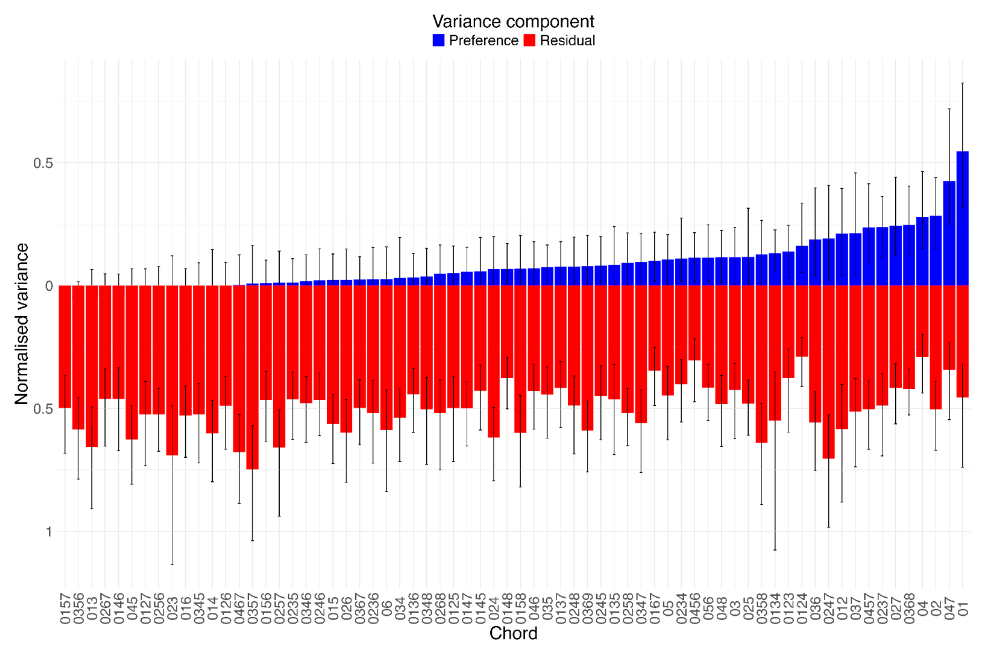
- Modeling individual differences in chord pleasantness judgments Psychology of Aesthetics, Creativity, and the Arts (2026)
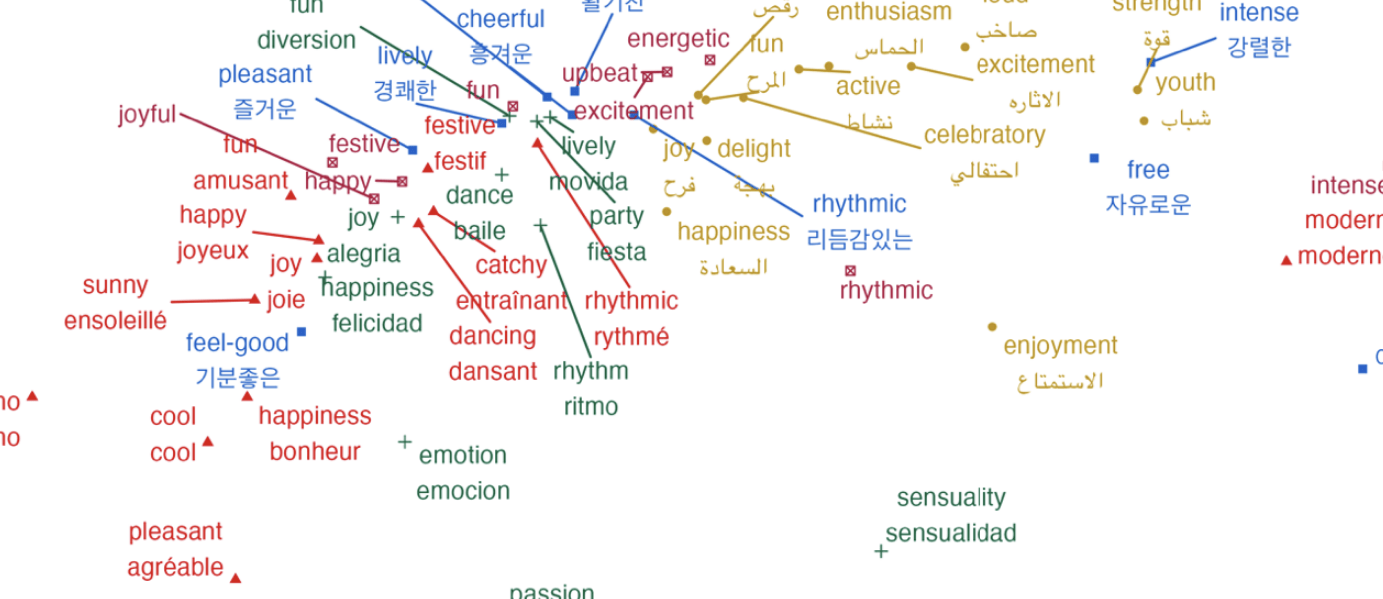
- GlobalMood: A cross-cultural benchmark for music emotion recognition International Society for Music Information Retrieval Conference (2025)
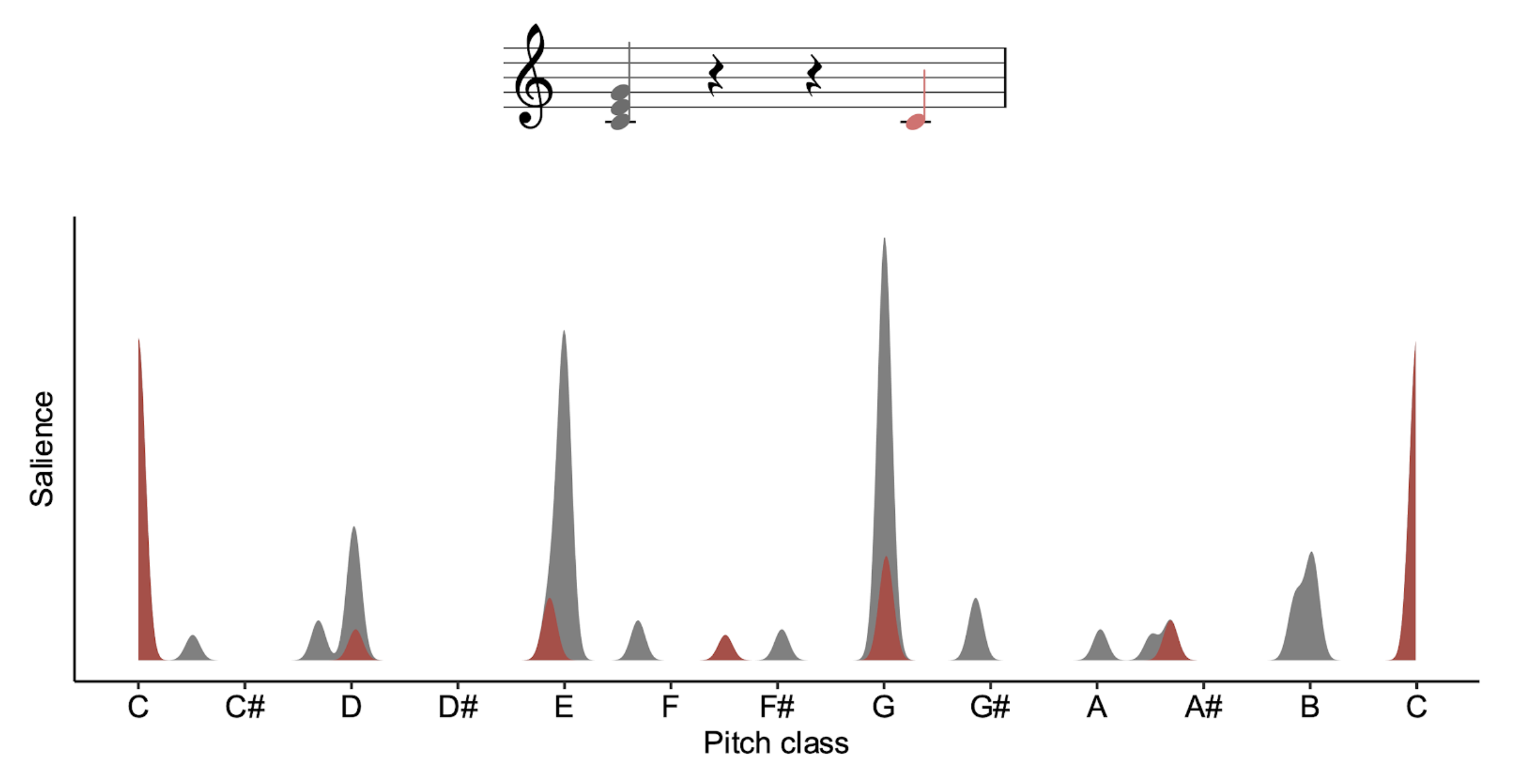
- Cognitive and sensory expectations independently shape musical expectancy and pleasure Philosophical Transactions of the Royal Society of London. Series B, Biological Sciences (2024)
- Consonance in the carillon Journal of the Acoustical Society of America (2024)
- Timbral effects on consonance disentangle psychoacoustic mechanisms and suggest perceptual origins for musical scales Nature Communications (2024)
- PPM-Decay: A computational model of auditory prediction with memory decay PLoS Computational Biology (2020)
- Uncertainty and surprise jointly predict musical pleasure and amygdala, hippocampus, and auditory cortex activity Current Biology (2019)