
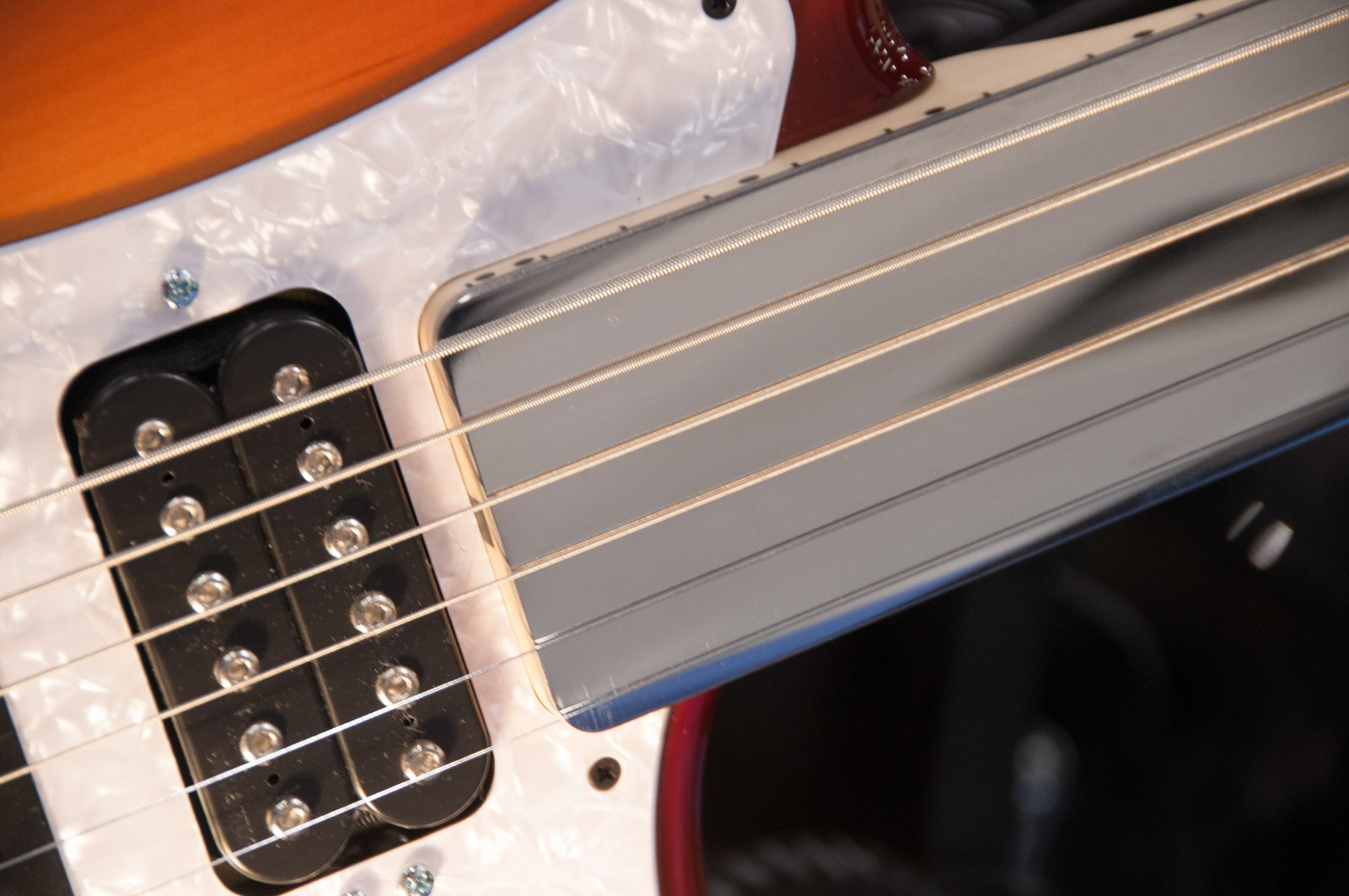
Microtonality may be defined as the use of pitch intervals distinctly smaller than a semitone. While various contemporary classical composers have explored microtonality, the vast majority of Western music is not microtonal, instead using a 12-tone scale or subsets thereof.
There is however a small contingent of artists exploring the applicability of microtonality to jazz music. Example groups include the Joe Maneri Quartet, Steve Lehman Octet, Amir ElSaffar, Georg Vogel, and Philipp Gerschlauer. These groups use microtonality in diverse ways, achieving distinctive and evocative effects. However, as of yet there has been basically no systematic academic study of microtonal jazz, either in terms of current creative practice or examining what underexplored creative possibilities might exist.
We are exploring these exciting questions in an international collaboration with the pioneering jazz musicians Lars Seniuk and Philipp Gerschlauer. This work counterposes practice-based research in Austrian conservatoires with psychological studies conducted with the CMS. The psychological studies will focus on the audience’s aesthetic experience of microtonal jazz, looking at the way that microtonal tunings interact with consonance, categorical perception, and functional harmony, as well as examining the role of enculturation and the way that the aesthetic experience developed with increased familiarity with microtonal idioms.
Newcomers would be welcome to join the psychological side of this project. Alternatively, there is scope for a complementary corpus analysis project that uses computational methods to study how microtonality is deployed in practice and relates these practices to psychological or music-theoretic models.
Related projects
Related publications
- Machine learning of artistic fingerprints in jazz Nature Machine Intelligence (2026)
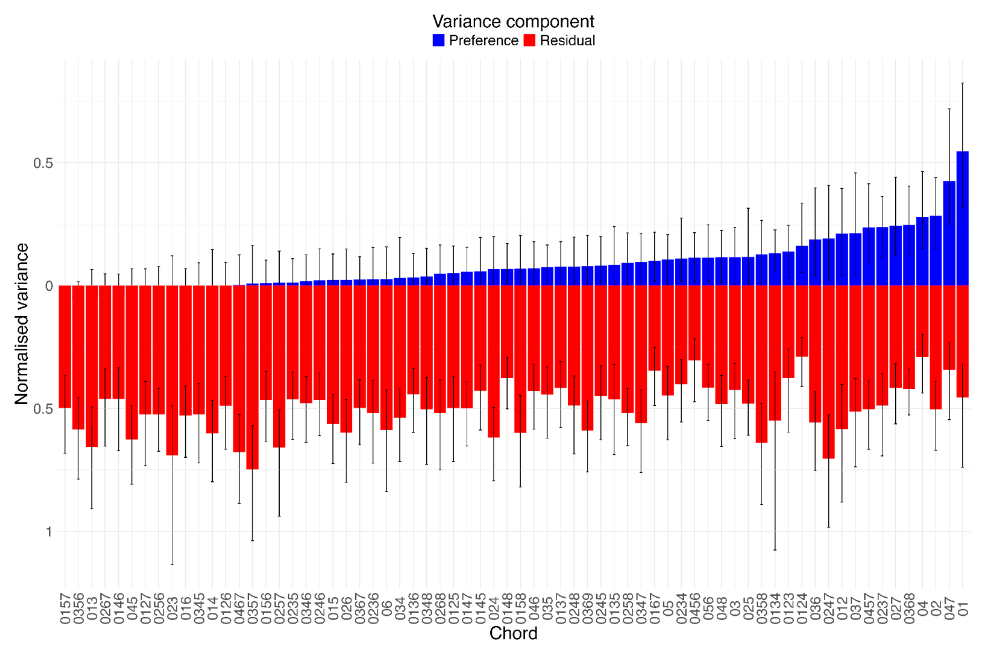
- Modeling individual differences in chord pleasantness judgments Psychology of Aesthetics, Creativity, and the Arts (2026)
- Consonance in the carillon Journal of the Acoustical Society of America (2024)
- Jazz Trio Database: Automated timing annotation of jazz piano trio recordings processed using audio source separation Transactions of the International Society for Music Information Retrieval (2024)
- Rhythmic qualities of jazz improvisation predict performer identity and style in source-separated audio recordings Royal Society Open Science (2024)
- Timbral effects on consonance disentangle psychoacoustic mechanisms and suggest perceptual origins for musical scales Nature Communications (2024)
- Trade-offs in coordination strategies for duet jazz performances subject to network delay and jitter Music Perception (2024)