
Centre for Music and Science
  • Research
  • News
  • Publications
  • People
  • Datasets
  • Join us
← Back
Cognition
  • Emotion
    • Deconstructing emotional expression in pop music
    • Music for mood regulation
  • Memory
  • Expectation
  • Consonance
  • Score design for music reading
  • Neural synchrony in joint interaction
Culture
  • Jazz
  • Organ
  • Spontaneous music-making in the wild
  • Music, culture, and law

Neural synchrony in joint interaction
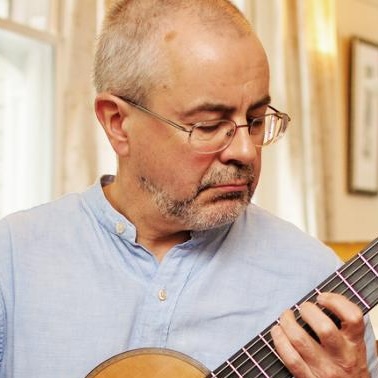

Ian Cross Juan Pablo Robledo Michelle Phillips Jason Taylor

This project follows up evidence that even brief spontaneous musical interaction can increase affiliative markers in later conversation. The team uses dual-EEG (hyperscanning) to examine how non-experts’ neural activity is modulated while making music together, and to identify shared cognitive processes underlying spontaneous interaction in speech and music.

Related Publications

  • Robledo, J.-P., Cross, I., Phillips, M., Kearney, J., & Taylor, J. Interpersonal neural synchrony in joint music-making and conversation: toward an integrative Marr-level account PsyArXiv (2025)
  • Robledo, J. P., Hawkins, S., Cornejo, C., Cross, I., Party, D., & Hurtado, E. Musical improvisation enhances interpersonal coordination in subsequent conversation: Motor and speech evidence PLOS ONE (2021)
Centre for Music and Science University of Cambridge

Centre for Music and Science, Faculty of Music, 11 West Road, Cambridge CB3 9DP

cms@mus.cam.ac.uk

© 2026 Centre for Music and Science