
Expectation



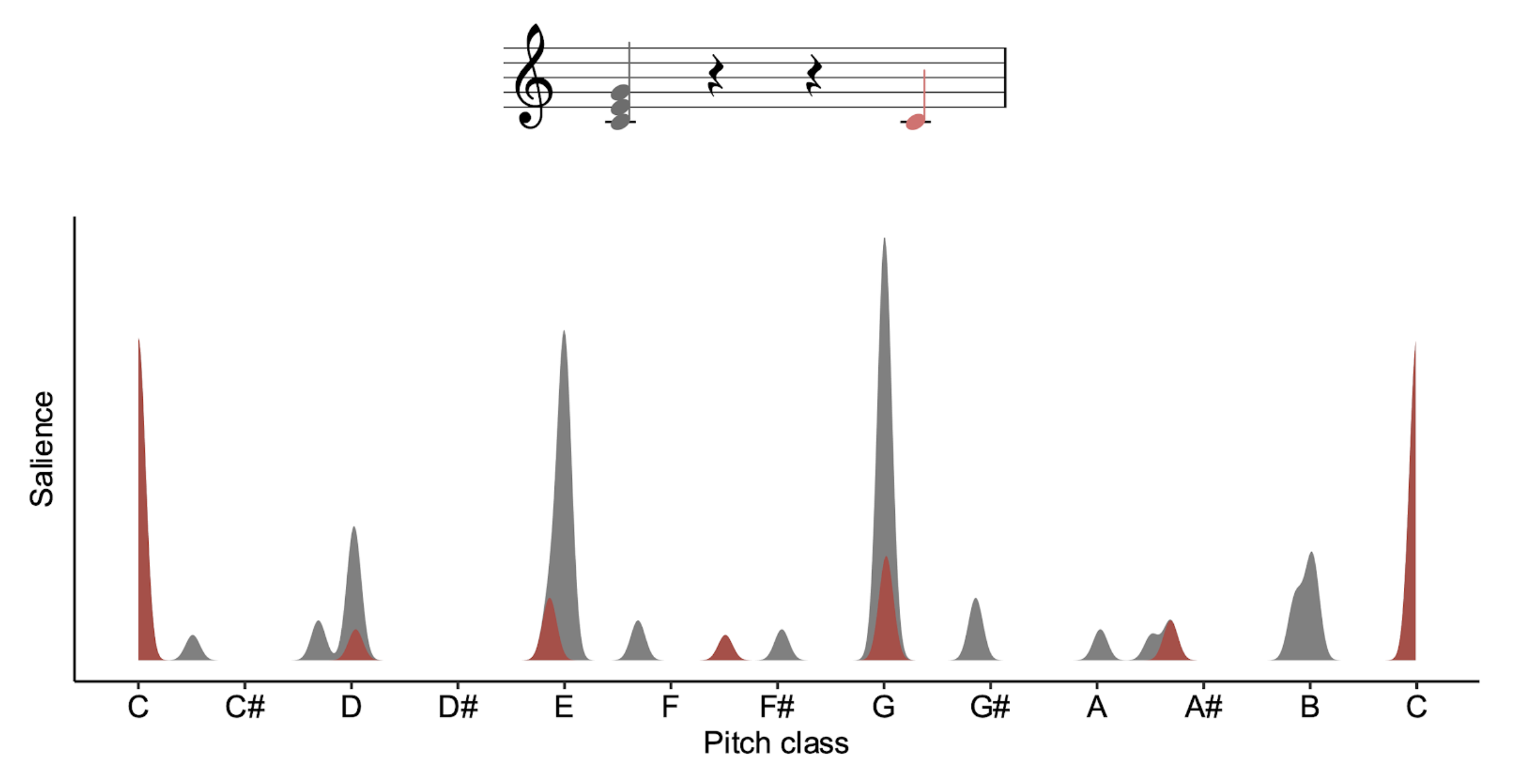
As we listen to music, our brain constantly generates expectations for what might happen next. These expectations come from the structure of the music itself, and the way that we interpret it in the context of our lifetime history of music listening. As the music continues, the expectations can variously be satisfied, frustrated, or delayed; these dynamics of expectation have a strong emotional effect on us, and contribute integrally to the music’s interest and aesthetic effect.
Our research on expectation seeks to build and test computational models that simulate these dynamic processes of expectation in the listener. Some of these models are probablistic: they use machine learning to simulate how the brain learns patterns in the music it hears. and operationalise expectation in terms of probabilistic predictions made by the model. Others are psychoacoustic: they work by simulating how sound is processed by the early stages auditory system, and capture how certain sounds might prime other sounds through fundamental acoustic similarities.
Related Publications
- Cognitive and sensory expectations independently shape musical expectancy and pleasure Philosophical Transactions of the Royal Society of London. Series B, Biological Sciences (2024)
- PPM-Decay: A computational model of auditory prediction with memory decay PLoS Computational Biology (2020)
- Uncertainty and surprise jointly predict musical pleasure and amygdala, hippocampus, and auditory cortex activity Current Biology (2019)